

DOEN is accelerating the transition to a regenerative economy that restores natural and social systems rather than depleting them and allows people and the planet to flourish. By funding pioneers with innovative ideas, DOEN is working to build a sustainable future. Collaboration and innovation sit at the heart of our approach. We support 40 pioneers working in this area. They’re paving the way to a resilient, balanced world.
A booster, and a pioneer too
At DOEN we focus on the regenerative economy: an economy that aims to restore natural systems and bring people and nature into balance. This concept gained prominence in 2024, and a growing number of entrepreneurs are working to realise it in novel ways. They’re restoring landscapes and oceans (the “blue economy”) to facilitate a sustainable food system and circular food production. Similarly, DOEN has long worked to make a positive impact on people and nature – not just a “less bad” one – and entrepreneurs view DOEN as a pioneer in its own right.
Funding and knowledge-building
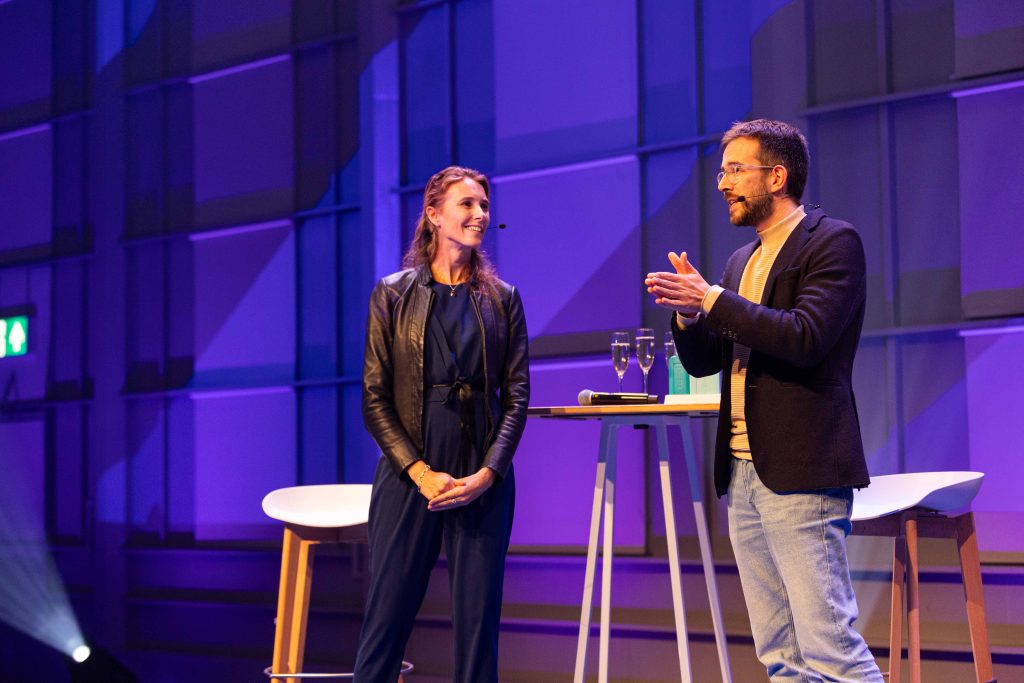
In 2024, we funded 40 pioneers working in the regenerative economy: 21 Dutch partners (13 of which had received prior funding) and 19 international ones (five of which had received prior funding). DOEN was active and visible in this area, organising and participating in workshops, panels and events, for example at the Sankalp Africa Summit, ImpactFest, the Regenerative Food Systems Investments Forum, GOGLA and OPES-LCEF. We shared the resulting insights with other parties. In 2024 we looked closely at the opportunities afforded by natural (bio–based) materials, collaborating with artists and designers in our Art & Design for Biobased Materials programme.
Trust-based financing
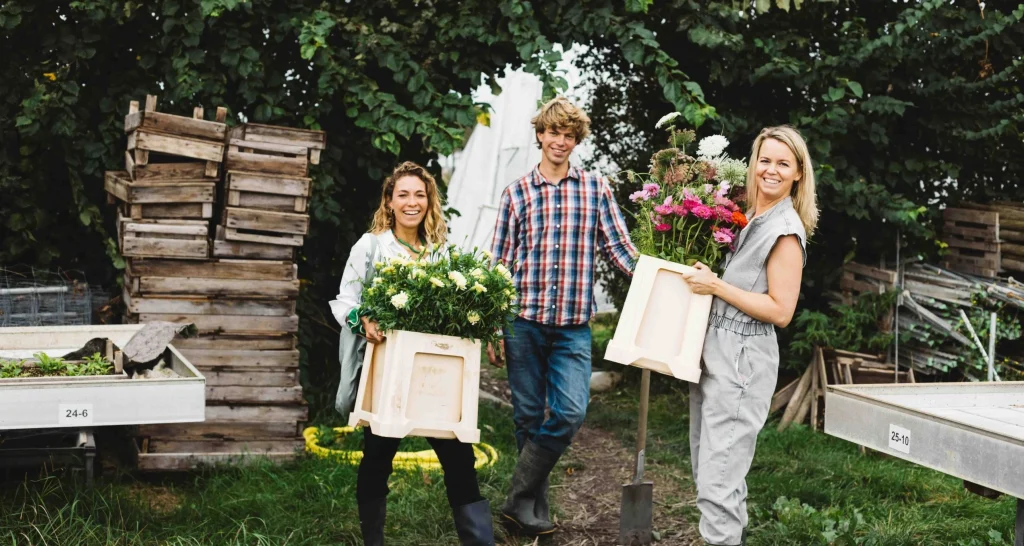
To boost the regenerative economy and further the food transition, in 2024 we worked with partners such as Impact Hub Amsterdam, and with other financiers, some within FIN’s Food Funds Gathering. With fellow financiers we set up a discretionary funding scheme to offer trust-based support to key parties in the sector. Pioneers such as Herenboeren and Lena the Fashion Library – and ecosystem-boosting projects that help them, like the Soil Heroes Foundation, Gideon and Wij.land – are swimming against the tide. These companies encounter more obstacles and difficulties in raising follow-up funding than other businesses. Wherever possible, we provide them with institutional or longer-term funding, offering them the capacity and flexibility to adjust their approach if circumstances change.

Sharing experiences to inspire others
As awareness of the concept of regeneration increases, so does the risk of greenwashing and dilution of the term’s meaning. The sustainability agenda is under strain around the globe, and other investors are shifting their focus from sustainable projects to technological innovation and efficiency. By sharing the experiences and results we’ve gained in funding regenerative–economy projects – as in this interview with programme manager Maarten Derksen – we hope to make more people enthusiastic about a system that restores and regenerates natural and social systems rather than depleting them.
New movements and systemic change
We’re seeing positive developments in the Netherlands in the emergence of bottom-up movements. These have led to, for example, the Rights of Nature legal framework, alternative land ownership structures such as Land van Ons and Lenteland, and large-scale system interventions that aim to achieve lasting change, such as the Ex’tax Project, the True Price Foundation and the Robin Food Coalition. In supporting these movements, DOEN helps to strengthen the preconditions for a regenerative economy, so impact-driven entrepreneurs can do more and people and nature can look forward to a better future.