
Where worlds meet: how DOEN looks beyond themes
When does a project truly contribute to change? Often not because it fits a single theme, but rather because it connects different worlds.
Challenges such as climate change, resource scarcity and growing inequality call for new ideas and for collaboration. The DOEN Foundation is working on the transition to a circular economy, a society where everyone counts and one in which there is room for radical imagination. Based on three themes, DOEN supports projects that contribute to this. The themes are Regenerative Economy, Social Solidarity and the Power of Imagination.
However, not every project fits neatly into a single theme. In those cases, DOEN employs a DOEN-wide approach: teams examine projects together, share knowledge, and jointly invest in projects that contribute to the transitions to which DOEN is committed.
Room for projects that fall outside themes
“There are always projects where you feel this is important, we have to make this possible,” says Maarten Derksen, Regenerative Economy Programme Manager. “But they don’t always fit exactly into one of our themes.” These include projects that either touch on multiple themes or do not fit into a single theme, but still contribute to the transitions DOEN wants to accelerate. “Sometimes we see new developments or themes emerging,” says Maarten. “With our DOEN-wide approach, we can make room for that.”
No more thinking in boxes
The strength of this way of working lies not only in the joint budget, but especially in the way of looking at things. “If you only look from the perspective of your own theme, you sometimes see only part of the story,” says Reineke Schermer, Social Solidarity Programme Manager. “By looking at projects with colleagues from other teams, you can see more quickly how different transitions are connected with each other.”
That leads to new forms of cooperation. For example, in initiatives concerning food and health, where the green and social aspects converge.
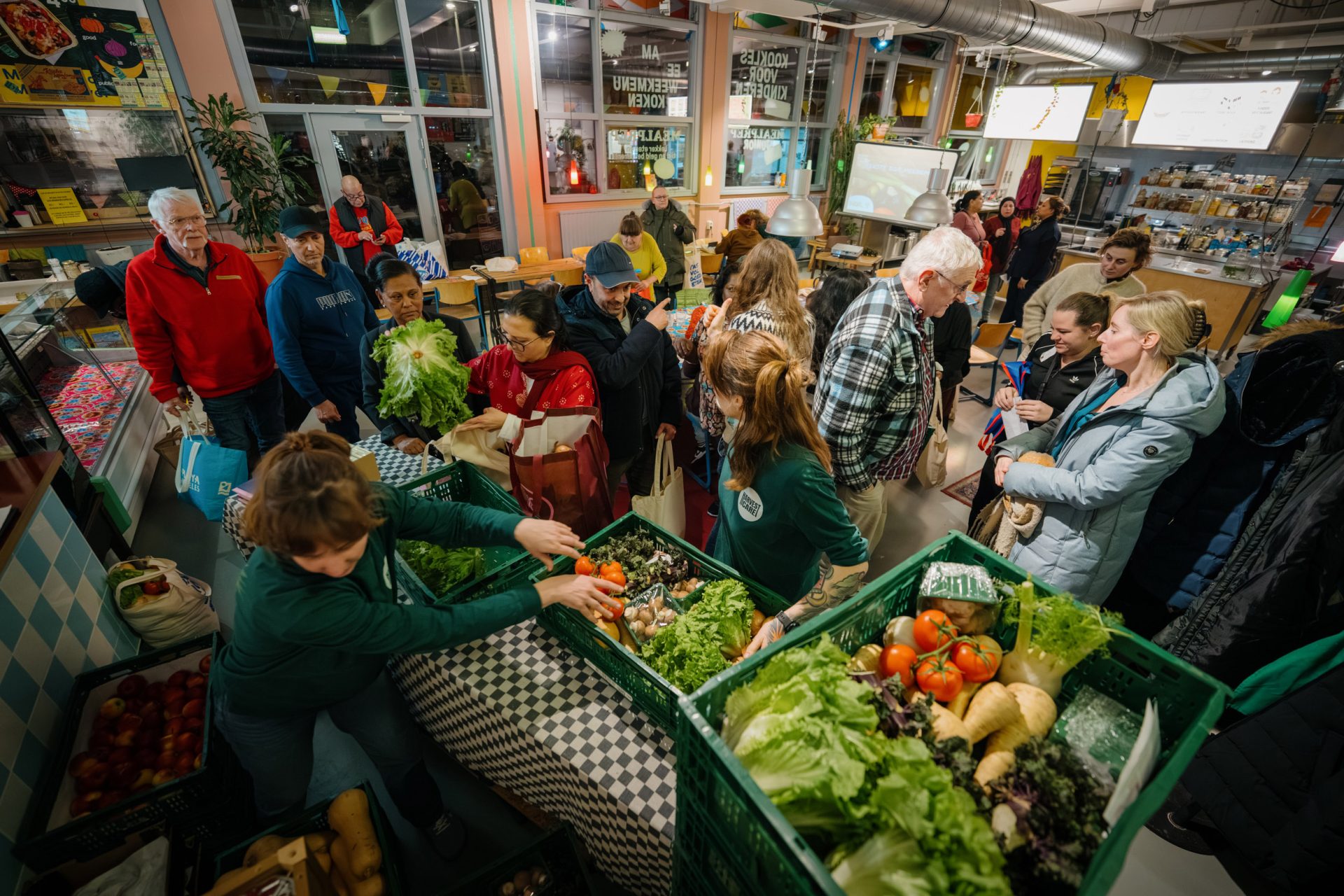
Projects such as Public Food and HarvestCare show how food is not just about agriculture or sustainability, but also about health, access to healthy food and social justice. “By supporting these projects DOEN-wide, we combine the perspectives from the Regenerative Economy team, the Power of Imagination team and the Social Solidarity team,” says Reineke. “This creates a more complete story.”
“Another great project in which we combine a creative approach with social or sustainable impact are our projects Art & Design for Biobased Materials and Art & Design for Inclusion,” says Yu Lan van Alphen, Power of Imagination Programme Manager. “In this, we provide a fertile breeding ground for innovative projects that aim to make the world greener, more socially inclusive or more creative. From a textile designer who dyes clothes with fungi instead of chemical dyes to an artist who connects people from different cultures through creating art together.”
Supporting new movements
Working DOEN-wide also makes it possible to support projects that strengthen new social movements. Like Hero Labs, which supports and connects activists working for a better climate. Or the School for Moral Ambition, which encourages people to use their talents for social change.
This approach also provides room for projects working towards a different relationship between humans and nature. Good examples are the Animal Labour Union or the Zoönomic Institute. “These are initiatives that you might not immediately expect from DOEN,” says Maarten. “But they certainly fit the changes we want to accelerate.”
Cross-border cooperation
DOEN takes a cross-thematic approach to projects both nationally and internationally. New forms of cooperation are created by combining the knowledge and networks of different teams. One example is the Lumbung-Schumacher Action Lab, where artists, thinkers and activists work together on new forms of economy and partnership. The Indonesian initiative Jatiwangi Art Factory also shows how art, community and the local economy can be connected.
“Projects like these show how ideas from different fields can come together to trigger new movements,” says Maarten.
More than funding
At DOEN, this approach is yielding significant results. Programme managers are getting to know the themes of other teams better and see where connections lie more quickly. “You automatically broaden your thinking,” says Reineke. “You can see how a project can reinforce multiple changes simultaneously.”
This way of working also has clear advantages for the projects themselves. Because several thematic teams are involved, partners not only receive financial support, but also access to a larger network and more knowledge. “For partners, that can really make a difference,” says Maarten.
Just start
The method has been deliberately kept simple. There is no complicated structure or separate application process. Projects simply submit their application using DOEN’s online form. The teams then consider together whether a project is interesting to support jointly. If programme managers from different teams are keen on it, the project is jointly explored.
“The nice thing is that we don’t make it too complicated,” says Maarten. “We are not going to start talking endlessly about structures. If we think something is important, we will look at it together.”
Inspiration for other funders
This DOEN-wide approach shows that collaboration across themes can open up new opportunities. Freeing up funds, sharing knowledge and looking at initiatives from multiple perspectives create new opportunities. “Many of today’s challenges cannot be addressed in a single theme,” says Reineke. “It is by looking at things together that you can make more possible.”
DOEN hopes this way of working will also inspire other funders to not only think in terms of individual programmes or themes, but to look together at what projects are needed to accelerate the transitions of our time.
Voorbeelden
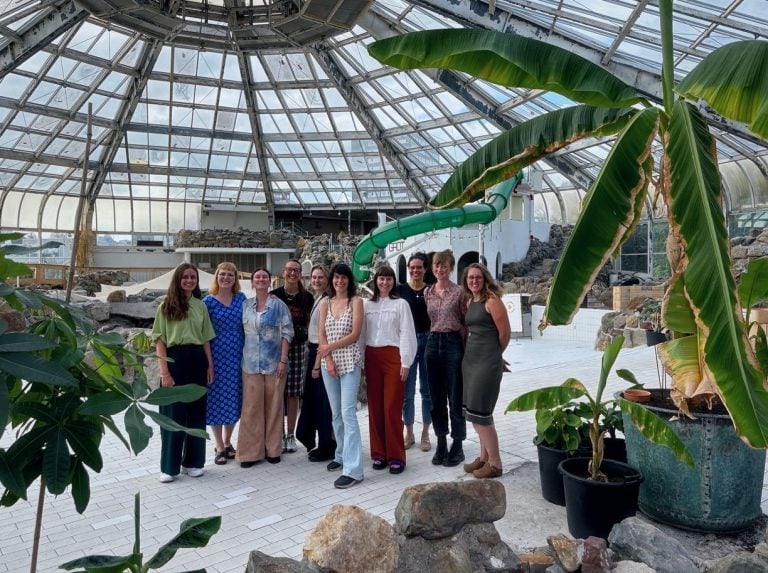
From a textile designer who dyes clothes with fungi instead of chemical dyes to an artist who connects people from different cultures by creating art together. These kind of initiatives combine a creative approach with social or sustainable impact. To provide these overarching projects with a good breeding ground for growth, DOEN developed its Art & Design for Inclusion and Art & Design for Biobased Materials programmes.
Art & Design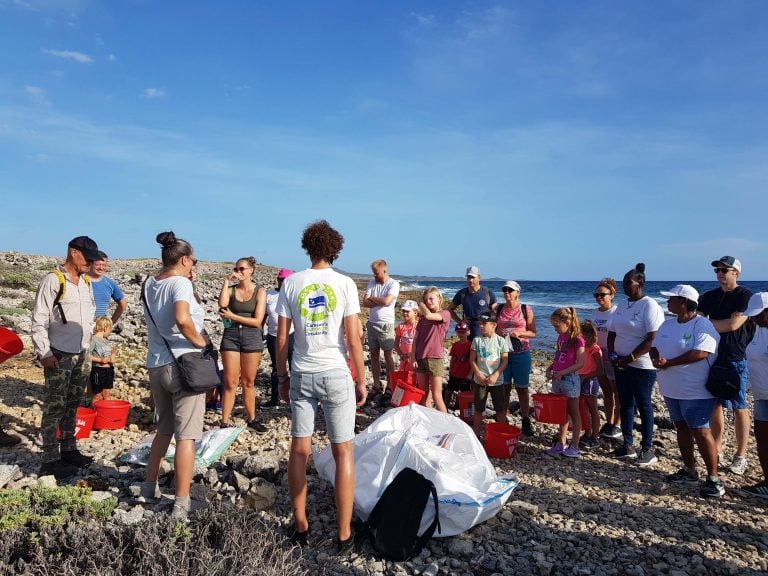
Green Phenix is a social enterprise in Curaçao dedicated to fostering a circular and inclusive economy for a sustainable Curaçao. Green Phenix creates awareness of plastic pollution and, in addition, they employ and guide people who are further away from the labour market. The partnership with DOEN signifies a significant step forward in Green Phenix’s mission to strengthen the community and promote a more sustainable future on the island.
Green Phenix