


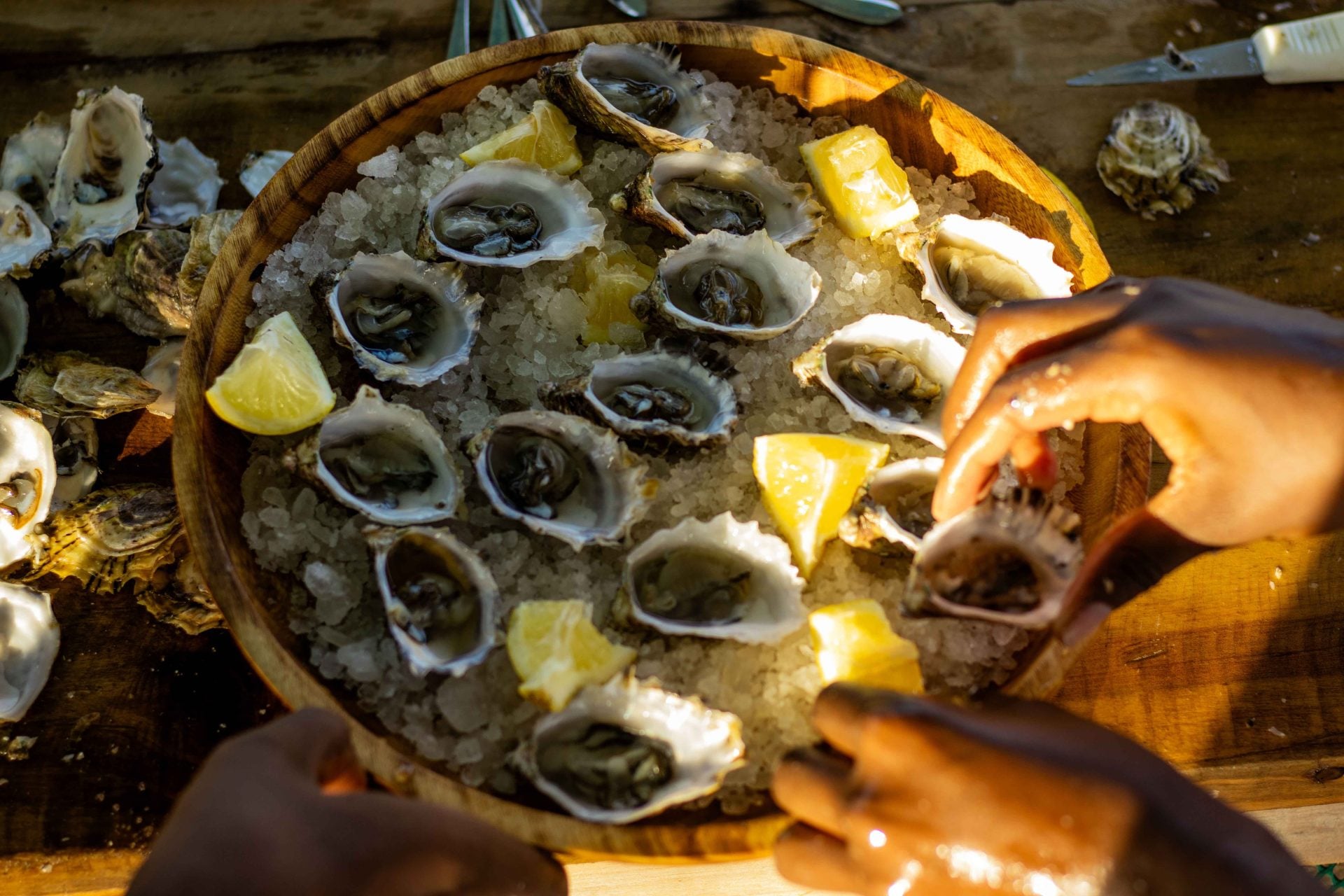
Swahili Coast Farms restores the sea through oyster farming
Along Kenya’s southern coast, the ocean and coastal communities are under pressure. Overfishing, climate change and pollution mean fewer fish, less marine life and limited economic opportunities. Swahili Coast Farms shows there is another way. By cultivating oysters, they help restore marine ecosystems while creating jobs for people living along the coast.
Demand outstrips supply
In Kenya, oysters have been eaten for a long time, especially when fish are scarce. However, they are often harvested too early from the wild, including from vulnerable ecosystems at the boundary between land and sea: mangrove forests. As a result, oysters have no time to grow and gradually disappear from the sea. There is also little focus on quality, sustainability and food safety. Demand for oysters exceeds supply, while local production remains limited and imported oysters are expensive and less fresh.
Protecting nature while creating work
Swahili Coast Farms cultivates oysters offshore, not in the mangrove forests along the coast. The oysters are given time to grow and feed on algae that occur naturally in the water. This helps protect nature and results in a more sustainable product. At the same time, the oyster farm creates employment in Gazi Bay, a region with few job opportunities. Many people here rely on fishing, even as catches continue to decline. Swahili Coast Farms offers work to men and women from the local community, including forcibly displaced persons from neighbouring Tanzania. Employees receive training and a fair wage.
Oyster farming on Kenya’s southern coast
Swahili Coast Farms was founded in 2022 with the aim of restoring oceans, creating jobs for coastal communities and producing local alternative proteins through oyster farming. In Gazi Bay, on Kenya’s southern coast, a pilot oyster farm launched in late 2024. In 2025, the first oysters were harvested and sold to hotels and restaurants in the region. The pilot showed that the oysters grow well and that there is strong demand.
Oyster farming within the Blue Economy
Oyster farming plays a distinctive role within the regenerative Blue Economy, which uses the sea and coast in ways that help nature recover. Oysters filter and clean the water and contribute to greater marine biodiversity. The DOEN Foundation supports Swahili Coast Farms because the initiative demonstrates how food production, nature restoration and employment can come together within the Blue Economy.
“Swahili Coast Farms is a pioneer in East Africa. They show that food production can also contribute to restoring the sea and nature while at the same time creating new opportunities for coastal communities.” Maaike Broekhuis, Programmamanager at The DOEN Foundation
The DOEN Foundation supports Swahili Coast Farms thanks to the players of the Postcode Loterij.


