


Bamboo Uganda is building a future with bamboo
Bamboo grows quickly, absorbs CO₂ and can regrow again and again after harvesting. Bamboo Uganda aims to make better use of bamboo’s potential in Uganda. The association brings together farmers, processors, designers and other entrepreneurs and works on everything needed to further develop the sector. From knowledge and research to processing, new markets, and regulations for building with bamboo. With the support of the Postcode Loterij Fonds, Bamboo Uganda has grown strongly over the past two years and has played an important role in the development of the bamboo sector in Uganda. We spoke to co-founders Sjaak de Bloois, Robert van Kats and Muhumuza Collin. They are each working towards the same ambition from a different part of the bamboo chain.
Building a bamboo sector together
For a strong bamboo sector, the entire supply chain must function effectively. Farmers must know how to cultivate and harvest bamboo properly, processors must be able to turn it into usable materials and designers and builders must know how to use it safely. Sjaak and Robert noticed that various entrepreneurs were working on this, each in their own way. Which is why, together with others, they set up Bamboo Uganda. The member companies remain independent. Bamboo Uganda brings them together and addresses topics that are difficult for a single company to organise, such as research, training, charting bamboo plantations, and consulting with the government.

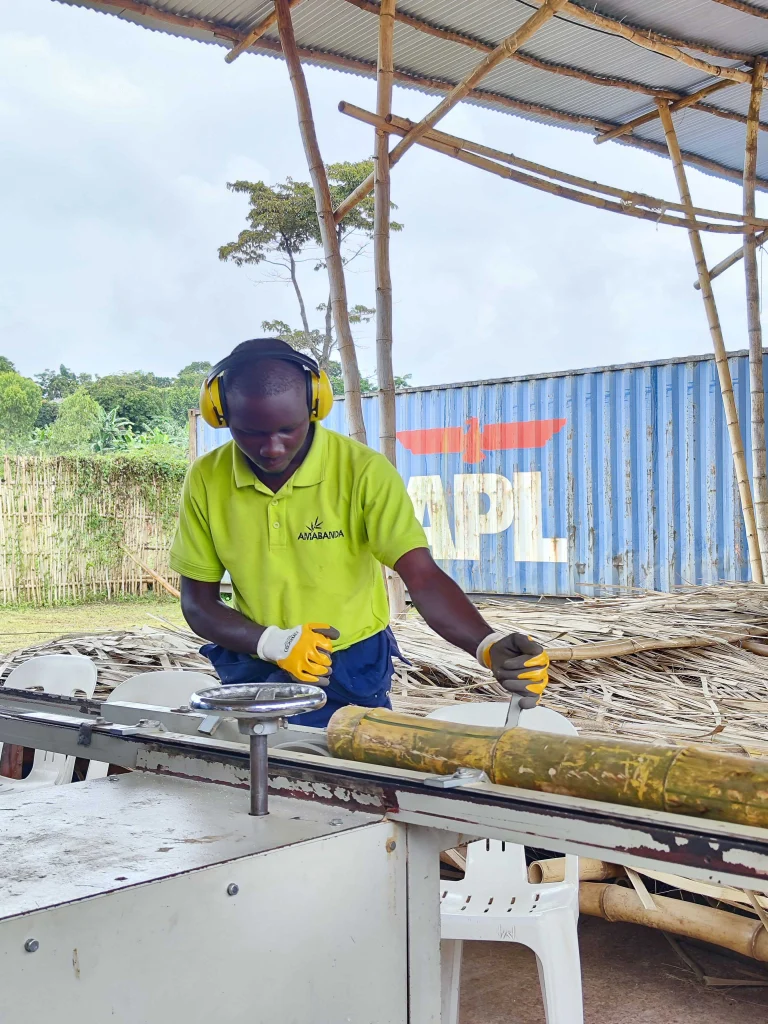
“We were all working on our own little islands,” says Sjaak. “But you really need to be pulling in the same direction.” The three men also work at different points in the supply chain. Sjaak’s company, Bijimu Bamboo Farming, specialises in bamboo cultivation. Robert is a co-founder of the design and building company Studio Akeka. The company builds with bamboo and investigates how this material can be used in buildings. Muhumuza is the general manager of Amabanda, where bamboo is processed into poles and panels for construction and raw materials for other products.

From bamboo stalk to building material
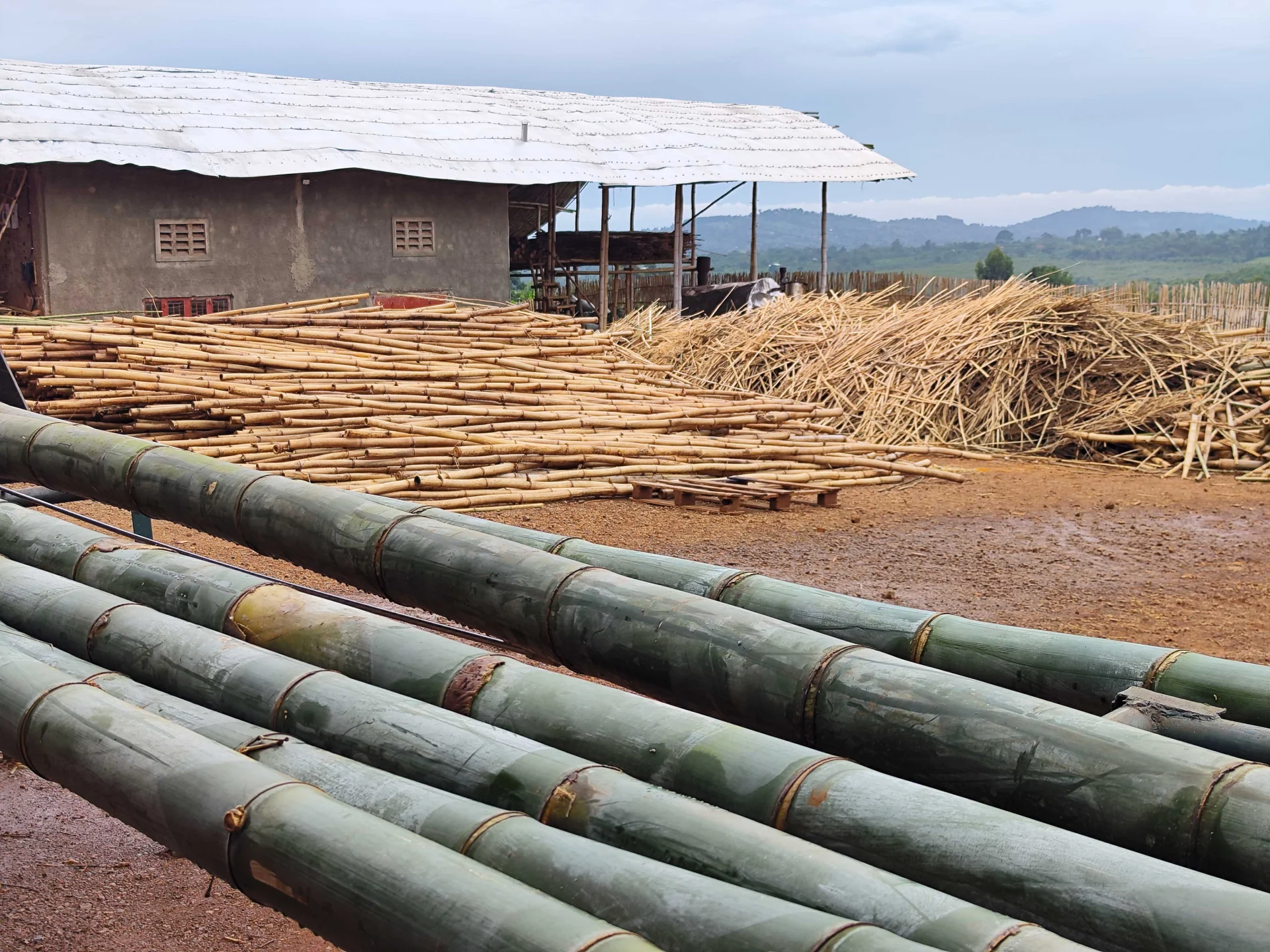
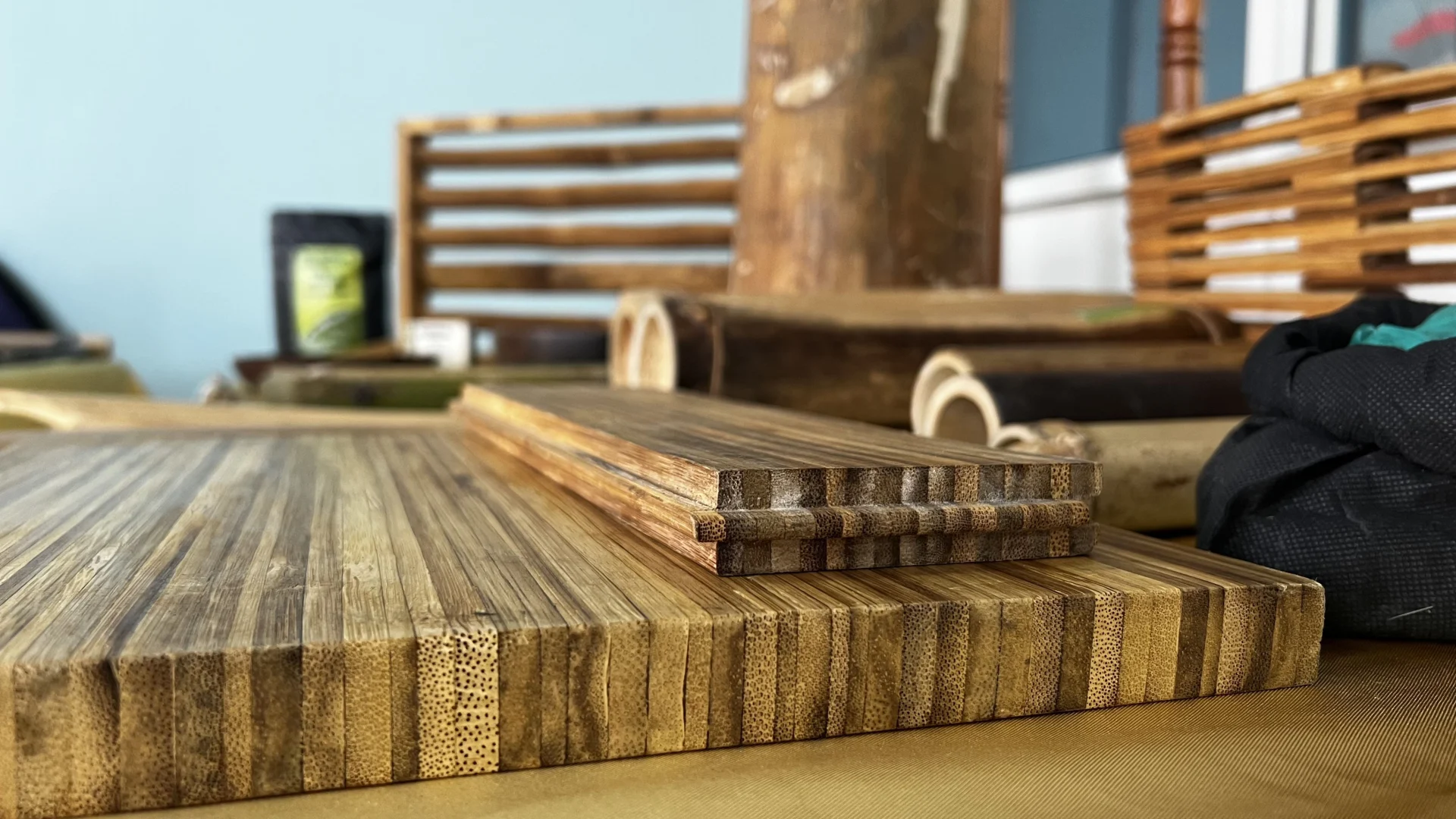
One advantage of bamboo is that the plant regenerates even after harvesting. Only the fully grown stalks are harvested, and new stalks take their place. As a result, a well-managed plantation can continue to produce for a long time. The bamboo is then processed at Amabanda. With support from the Postcode Loterij Fonds, Amabanda received machines through Bamboo Uganda that can be used to process bamboo into sprits that are used for making Bamboo laminated flooring and furniture, for example. “People had never heard of or seen laminated boards being made from hollow bamboo poles,” says Muhumuza.
Robert too is demonstrating what is possible with bamboo through Studio Akeka. The architectural firm now uses bamboo in the construction of buildings. “Bamboo is still often seen as a cheap building material,” says Robert. “With a luxury lodge in Bwindi, for example, we’ve shown that much more is possible.”
A market for farmers
A strong sector starts with the farmers who grow bamboo. As long as there are hardly any customers, it is not attractive for them to invest in it. Muhumuza even saw farmers who wanted to clear their plantations because they couldn’t sell their bamboo. That is now slowly changing. Processing companies like Amabanda are buying in bamboo, and new markets are emerging. “Now farmers know that there is someone who wants to buy their bamboo,” says Muhumuza. “We have given farmers perspective again. At the same time, jobs are being created and farmers are receiving more income.”
Through Bijimu Bamboo Farming, Sjaak is also exploring how farmers can grow bamboo alongside other crops. “For example, bamboo can grow along the edges of agricultural land, while other crops are grown on the same land. This gives farmers an additional product to sell, without being entirely dependent on bamboo.”
The next step
Bamboo Uganda wants building with bamboo to become just as common as building with wood, steel and concrete. Further steps are needed to achieve this. “For large projects, you need a lot of high-quality bamboo,” says Robert. “That is one of the biggest challenges right now.” This is one of the reasons why Bamboo Uganda has charted plantations across the country. The organisation is also working on new markets. For example, together with Postcode Loterij Fonds partner Easy Housing, they are investigating how bamboo can be used for affordable housing. In addition, Bamboo Uganda is working with experts and the Ugandan government to develop regulations for safe construction using bamboo. “If just one company approaches the government for this, it won’t get very far,” explains Sjaak. “That’s why you need an organisation that can speak on behalf of the entire sector.”
The role of the Postcode Loterij Fonds
With the support of the Postcode Loterij Fonds, there is the time and space to further develop the bamboo sector. For Robert, the value of that support lies primarily in the acceleration it brings about. Entrepreneurs normally have to spend their time mainly on projects that generate immediate income. Thanks to the Fund, they can also work on what is needed to move the sector forward as a whole. “For example, who has the time to get six different ministries together and explain what bamboo can offer? As a business, you don’t make money from that straight away.” Muhumuza can now see the results all around him. “If the Postcode Loterij Fonds hadn’t believed in us, the bamboo sector wouldn’t be as vibrant as it is now.”
Over the past two years, Bamboo Uganda has taken on an increasingly important role in the development of the bamboo sector in Uganda. The ambition is to continue building in the coming years, with more farmers who can sell their bamboo, more local processing and more possibilities for using bamboo. Ultimately, Bamboo Uganda wants Uganda to be internationally known as a country with a strong bamboo sector.
The Postcode Loterij Fonds supports Bamboo Uganda thanks to the players of the Postcode Loterij.