
Projects that are making a difference in the CAS-BES Islands
In the CAS-BES islands (Curaçao, Aruba and Sint Maarten, Bonaire, Sint Eustatius and Saba) residents, artists and entrepreneurs are working on ideas that will help their communities to move forward. The DOEN Foundation is giving them room to experiment and grow. We support social initiatives, sustainable projects and artists who are working for change. With confidence, courage and a tailored approach, we invest early so that innovative projects can prove themselves and others can join in. We do this through the DOEN Foundation, the VriendenLoterij Fonds (VriendenLoterij Fonds) and the Postcode Loterij Buurtfonds (Postcode Lottery Neighbourhood Fund) Together, we are strengthening the islands from within.
The CAS-BES islands
In the CAS-BES islands, it is often difficult to find funding for socially inclusive, green or creative projects. Government support is limited and many plans are either still too new or too small for regular funding. The DOEN Foundation plays a leading role here. By being among the first to invest, we give projects a chance to grow and prove themselves. This not only helps the initiators themselves, but also makes it easier for other funds to get involved later. In addition, we connect people and organisations so that they share knowledge, collaborate, and strengthen each other.
The VriendenLoterij Fonds in the CAS-BES islands
The VriendenLoterij Fonds supports arts and culture projects in the CAS-BES islands. These are projects and socially orientated artists that make room for imagination, in which changes in society give rise to art or projects and in which new ideas emerge about the future and how we want to live together. We work with artists and cultural projects that explore social issues with communities and other participants. Art helps break down fixed ways of thinking and reveal new perspectives. In this way, we increase the transformative power of shared imagination.
In the CAS-BES islands, we mainly support places where young artists and creators can develop and join in. This enables the growth of a strong cultural basis. Sometimes we also support individual artists or collectives if they have a developed social art practice and work with communities and civil society organisations.
We encourage exchange between islands, within the Caribbean area and with partners of DOEN and the VriendenLoterij Fonds in the Netherlands and abroad. Sharing knowledge and collaborating allow projects to reinforce each other and create a larger network of artists and audiences.
Yu Lan van Alphen, VriendenLoterij Fonds programme manager: “There is a great need for exchange between the CAS-BES islands, and with art projects in the Netherlands and other regions where the DOEN Foundation is active. Projects can reinforce each other by collaborating and sharing knowledge.”
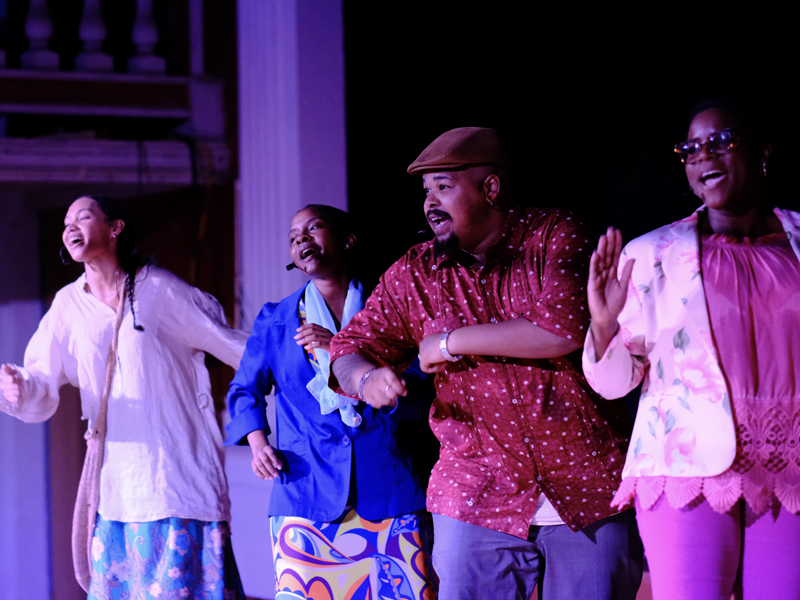
Example: Teatro KadaKen
Teatro KadaKen created the theatre production Rumannan Purunchi about family ties, memories and the search for a home against the background of changes in Curaçao. In a partnership between the theatre and the Curaçaoan community in the Netherlands, the original Papiamentu version of the production was also shown in the Netherlands, allowing the conversation about these themes to continue here. Teatro KadaKen also has its own theatre in Curaçao. This is an old theatre in the grounds of a nursing home. Teatro KadaKen’s ambition is to grow the place into a lively meeting place where young creators can work together, experiment, and inspire each other.
Read more about Teatro KadaKen (in Dutch)Postcode Loterij Buurtfonds in the CAS-BES Islands
Strong neighbourhoods start with residents with ideas. The Postcode Loterij Buurtfonds supports local projects in the CAS-BES islands through the Ban Biba Bario programme. This is a partnership with Unidat Di Bario Kòrsou (UdBK) and CEDE ARUBA to support neighbourhood projects in Curaçao and Aruba.
Ban Biba Bario helps residents turn their plan into reality, whether it’s a community food forest, a cultural celebration or a weekly sports activity for local people. The application procedure has been designed to be as low-threshold as possible and people can submit an application in their own language. The support is not just financial: residents also receive guidance in elaborating and organising their plans. This is how ideas grow into lasting improvements in the neighbourhood.
Odile Janssen, Postcode Loterij Buurtfonds programme manager: “It’s about more than just money. For many people, this is the first time they have received support. They feel their ideas are seen and taken seriously.”
In Aruba, initiators can contact CEDE ARUBA, and in Curaçao, UdBK. These organisations know the neighbourhoods, the people and the local dynamics. Together, they decide which projects will receive support. This ensures that control lies as much as possible with the community itself.
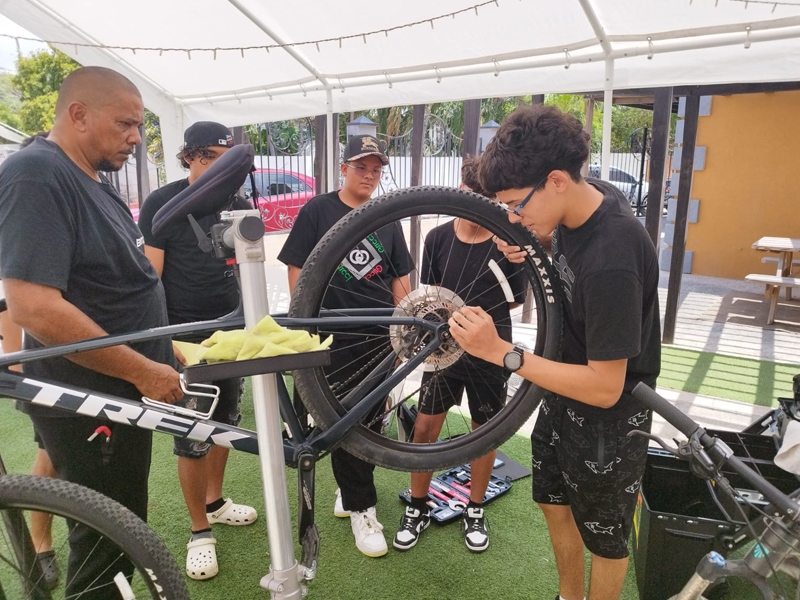
Example project Ban Biba Bario: Centro di Bario Savaneta
A local farmers’ market is under construction in Aruba’s Savaneta district. Here, local residents sell honey, fruits, plants and handmade products. The market is more than a place to shop: it’s a meeting place where people get to know each other, work together, and strengthen the local economy.
Read more about Ban Biba BarioThe DOEN Foundation in the CAS-BES islands
In the CAS-BES islands, innovative solutions are emerging from the bottom up. The DOEN Foundation supports people and organisations working with courage and creativity on socially inclusive, creative and ecological issues. These are projects run by people who don’t wait for someone else to solve the problem, but get moving themselves.
We encourage not only funding, but also knowledge sharing and collaboration between the islands and across different themes. In this way, projects reinforce each other and their impact grows. Maaike Broekhuis, DOEN Foundation programme manager: “By strengthening collaboration and the local ecosystem, we are building a resilient future with support for regenerative and entrepreneurial projects on the islands.”
Many projects combine circular work with socially inclusive or creative activities. They look beyond the environment and link regeneration to employment, community strength and future prospects. That is why we often support these projects not on the basis of one individual theme, but from DOEN across the board.
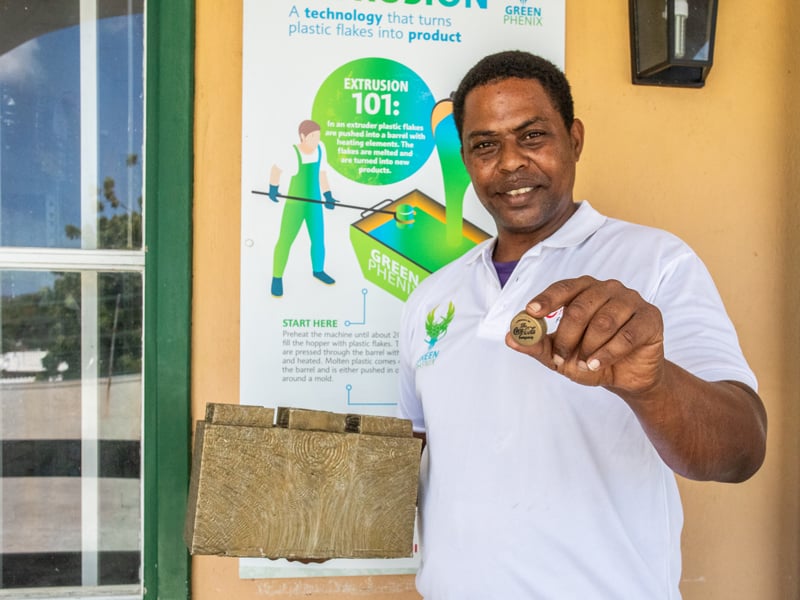
Example: Green Phenix
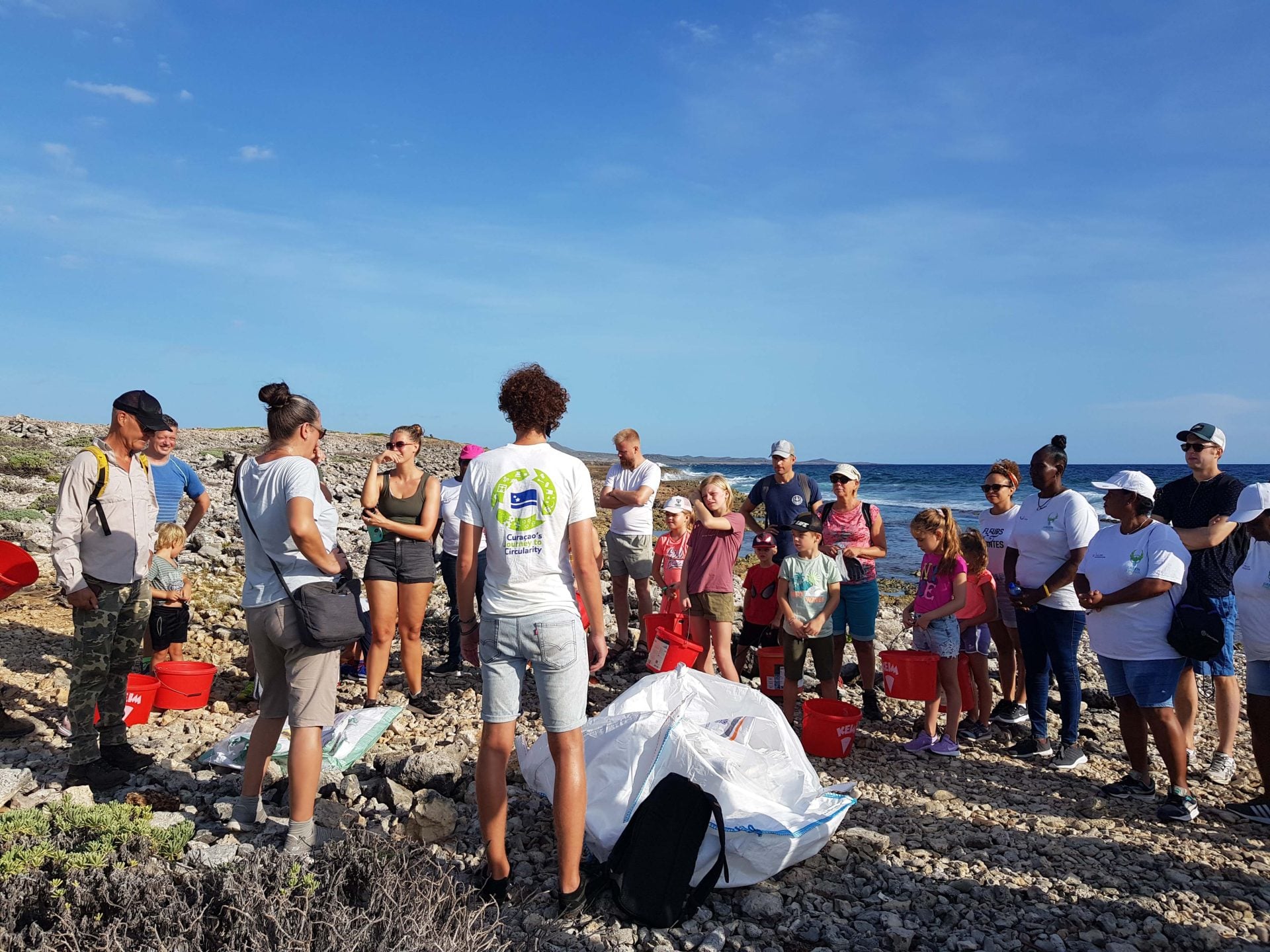
Curaçao-based social enterprise Green Phenix is working towards a more sustainable future. The company collects plastic from the countryside and beaches, reuses it to create new products, and raises awareness of plastic pollution and recycling opportunities. In this way, Green Phenix demonstrates how circular business can contribute to both environmental gains and social impact.
Read more about Green Phenix