

What can we learn from the forest?
Everything we do, from the thoughts we form to the choices we make, derives from our human–centred view of the world. Being numerous and dominant, people have a huge effect on the earth. But what if we took not ourselves but the forest as a starting point for devising new forms of thinking, working and producing? In his four-year art project StagingWood, the artist Elmo Vermijs is searching for new relationships between humans and the forest. He is doing so in conjunction with civil society organisations, activists, scientists, thinkers, island residents and the Oerol theatre festival.
Examining the forest from every angle
Ecosystems are complex. Everything works together and depends on everything else. Vermijs combines a range of knowledge, insights and approaches to learn from the forest in all its diversity. Each year he highlights a different phase of the life cycle: germination, growth, decay, death. He has invited a wide group of specialists – foresters, furniture makers, philosophers, data visualisation artists, environmental lawyers – to investigate individual parts of the forest and share their insights in tangible ways with Oerol festivalgoers.
Taking the time to create change
The premise behind StagingWood was to collect as many different views on the forest as possible. The conversations yielded unique and personal stories, exposed conflicts of interest and revealed innovative perspectives. A broader view and a new relationship with the forest require time and mutual trust among the various parties. Vermijs’s project creates the necessary space by proceeding slowly and not working towards a fixed outcome. For instance, after talking to the soil expert Tanja Dekker the employees of Staatsbosbeheer (the Dutch national forest service) are now more aware of underground processes and the enormous impact they have on a forest’s health.
“The time Elmo is taking with StagingWood is both exceptional and important. Transitions often occur slowly, and time is essential for processing impulses and influences. Through its sessions, StagingWood is creating nodes in a network. Over time, as a result of the sessions, other networks may also form and even continue to exist after the project has ended.” – Emma Hogendorp, Programme Manager, DOEN Foundation
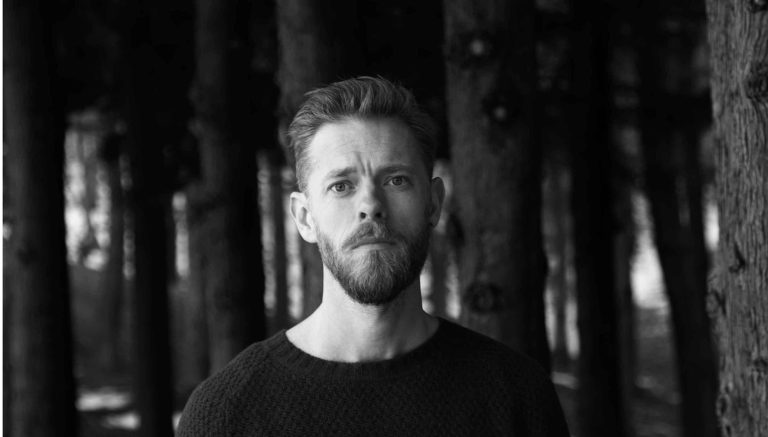
“What I find so extraordinary here is the links we’re exposing and the dialogue they’re triggering. For instance, the forest service used a drawing of the forest’s underground structure to start a philosophical discussion, asking questions like: What don’t we want to see in our organisation that’s coming in by the back door anyway, in magnified form? An analogy was made with microplastics in the forest, which have an invisible but enormously negative impact. By making these invisible processes visible, we can seek solutions for them.” – Elmo Vermijs, creator of StagingWood
Inspiring a new relationship with nature
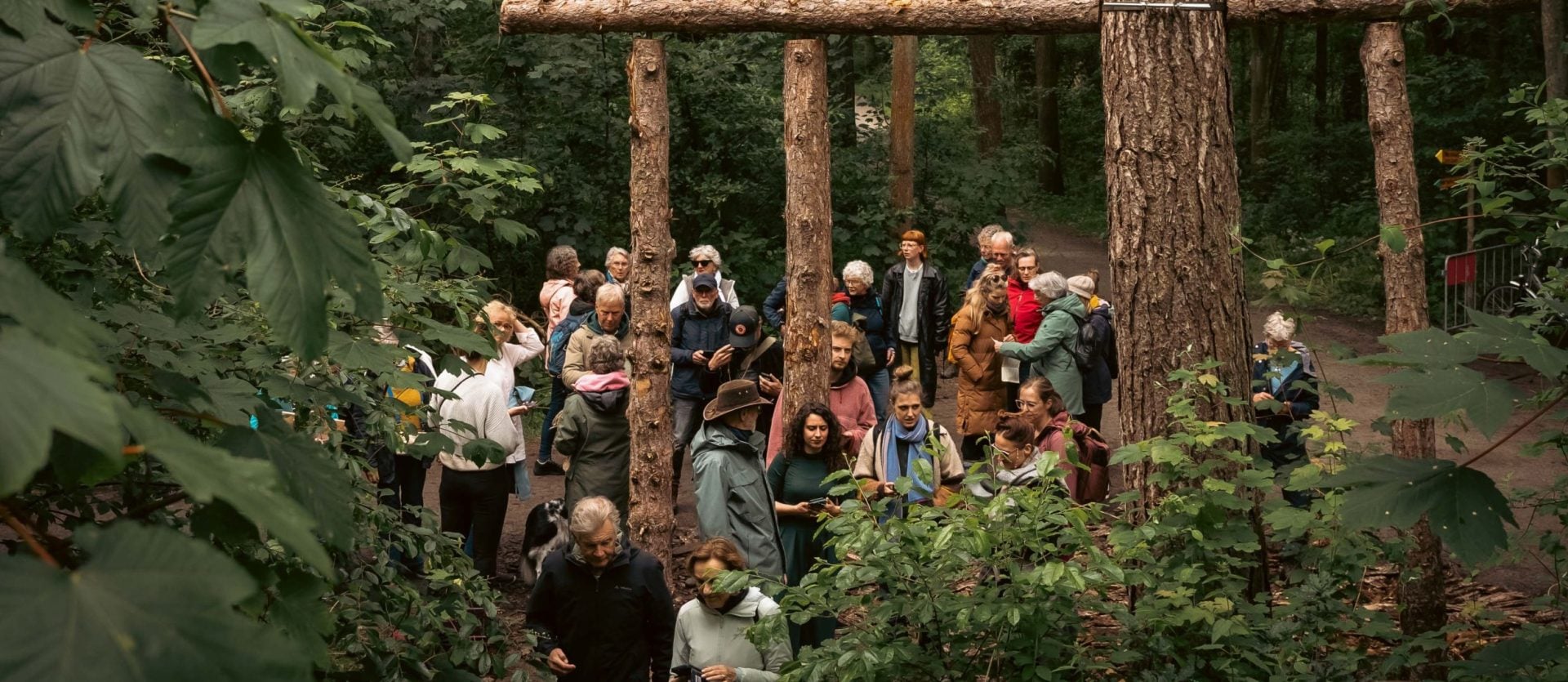
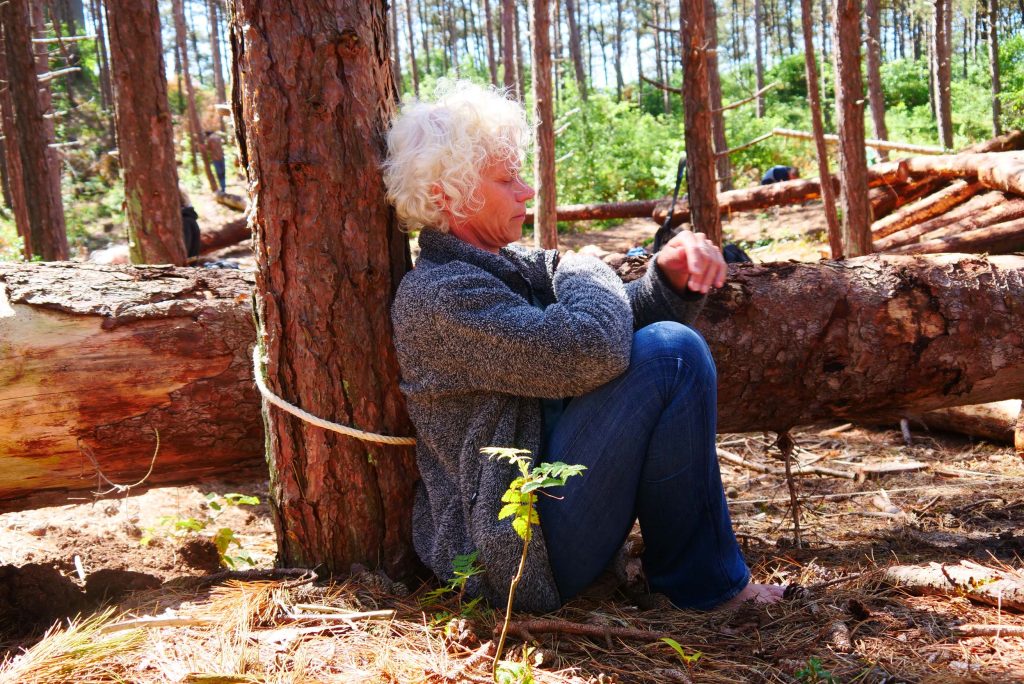
The project stirs up lots of emotions among visitors. Many return each year during the Oerol festival to see what the forest’s next life stage has brought. StagingWood drew 14,000 visitors in 2024. Vermijs’s installation Krak let people listen to the forest’s invisible processes through headphones in 400 popular workshops. Participants said they experienced the forest differently afterward, listening carefully to sounds and recognising their meaning.
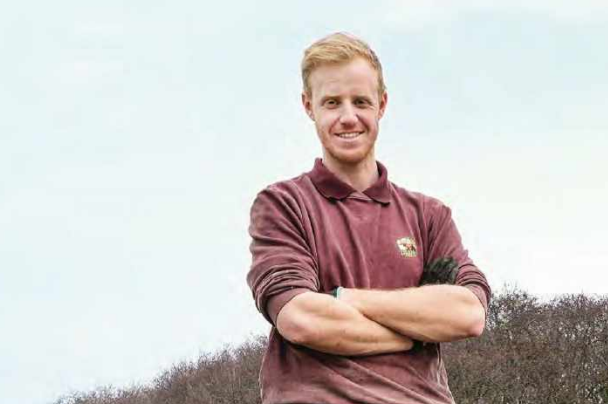
“We helped Elmo set up the forest installations, which are made from locally harvested wood. His way of working and ideas in StagingWood have broadened our outlook. We’re trying to directly apply as much of the theory you hear about in the seminars as we can. For example, we built a compost heater that generates heat and converts our waste flows into valuable compost for the forest. It keeps the nutrients on the island and helps us to conserve the forest for the many generations to come.” – Pieter de Jong, owner, Island Woods sawmill
Radical imagination for sustainable change
With StagingWood, Vermijs is using radical imagination to share insights that are hard to grasp through numbers and graphs alone. Starting an important movement – such as procuring a different legal status for trees and forests – means using not just your head but also your heart. Through art, experiences and music, StagingWood is helping to change how people perceive and value forests. In this way, it’s creating fertile ground for sustainable collaborations that will endure long after the seed has been planted.
“What I find so extraordinary here is the links we’re exposing and the dialogue they’re triggering. For instance, the forest service used a drawing of the forest’s underground structure to start a philosophical discussion, asking questions like: What don’t we want to see in our organisation that’s coming in by the back door anyway, in magnified form?” An analogy was made with microplastics in the forest, which have an invisible but enormously negative impact.” – Elmo Vermijs, creator of StagingWood